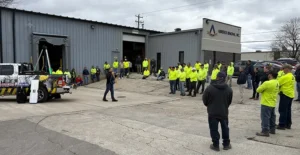
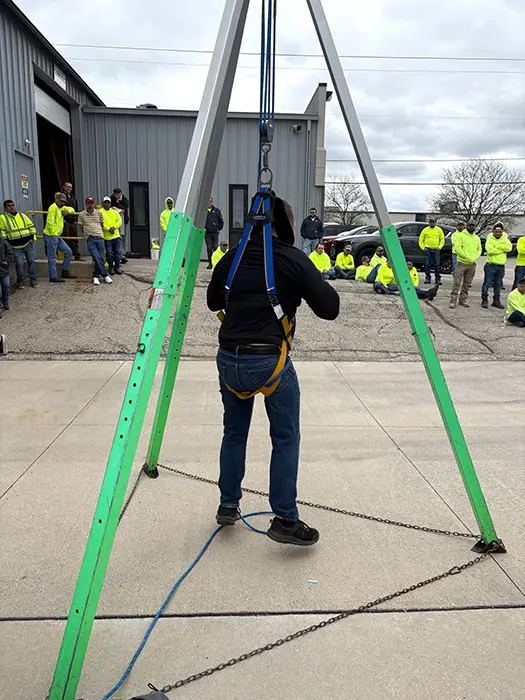
OSHA’s “National Stand-Down to Prevent Falls in Construction” is an annual voluntary event for employers to talk directly to all employees about safety and usually done the first week of May. On Friday, May 2nd, the eve of stand-down week, ARI Environmental and Quality Insulators did just that, bringing in safety professionals Chris Murray and Alex Crabbe from Werner and Rampart Safety respectively, discussing Fall Hazards and reinforcing the importance of Fall Prevention in construction. Falls are still the leading cause of worker deaths, so this dedicated time allowed for discussion on prevention strategies and reinforcement of safety expectations, with the ultimate goal to prevent injuries and save lives.
Safety discussions in general, are held daily at every jobsite, focusing on that day’s events and challenges, and being led in conjunction with site-specific safety and/or by company safety personnel, project managers and foreman. These discussions raise awareness, promote communication and strengthen our safety culture.
If you’ve ever owned, renovated, or inspected an older building, chances are you’ve heard the words asbestos and vermiculite, sometimes used interchangeably. Although they are not the same, confusion between them is common. In some cases, they’ve even been found together.
So what’s the real difference between asbestos and vermiculite, and why should homeowners care?
Key Differences and Similarities
Feature
Asbestos
Vermiculite
Material Type
Fibrous silicate minerals
Layered mineral that expands when heated
Appearance
Fibrous, thread-like texture, typically white, gray, or brown in its raw form
Loose-fill attic and wall insulation, horticulture
Asbestos Content
Professional testing identifies the percentage of asbestos present within the material
May contain asbestos
Health Risk
High potential risk if exposed
Potential health risk if contaminated with asbestos
Regulation
Strictly regulated
Regulated regardless of asbestos content
So Why Does Vermiculite Raise Safety Concerns?
The issue isn’t vermiculite itself, it’s contamination.
Some vermiculite insulation, particularly from a mine in Libby, Montana (active for much of the 20th century), was contaminated with asbestos. As a result, certain vermiculite products, especially loose-fill attic insulation in older homes, may contain asbestos fibers.
The Department of Health Services requires vermiculite to be handled as asbestos containing material. The material must be managed, removed, and disposed of following proper regulations.
How to Tell Them Apart
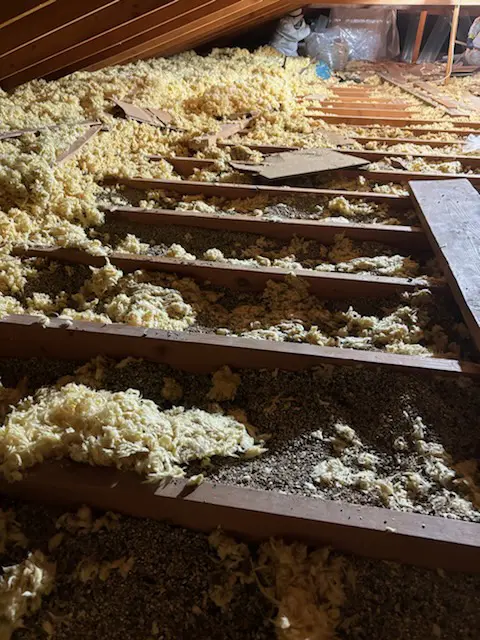
Asbestos often appears as fibrous, fluffy or woven material in its raw form. Note: In asbestos containing material, the asbestos fibers are difficult to see with the naked eyeVermiculite insulation looks like small, shiny pebbles or flakes, often gray, silver or gold brown
That said, you cannot confirm asbestos presence by sight alone. The only reliable way to know is through professional testing.
What Homeowners Should Know
Do not disturb insulation or suspect materials
Avoid sweeping, drilling, or vacuuming attic insulation
Hire licensed professionals for inspection and removal
If you suspect asbestos or vermiculite in your home, or simply want peace of mind, do not hesitate to call.
📞 Call ARI Environmental at 920-336-2002 for professional asbestos/vermiculite inspection and abatement services, and testing guidance. Our experienced team will guide you every step of the way, ensuring the protection of your property and your health.